

A Massachusetts District Court judge has dropped a second injunction blocking the U.S. Postal Service from implementing bar codes for mail-in ballot-tracking, acknowledging that a Supreme Court ruling “compelled” her to do so.
The development frees up the U.S.P.S. to move forward on its finalized rule that requires use of a barcode tracking system for election mail, amid more litigation efforts to block the barcode rules.
Democrat-led states, the District of Columbia, and the League of Women Voters had targeted White House Executive Order 14399, issued in late March. It cites federal statutes prohibiting mail fraud and directs the U.S.P.S. to initiate rule-making authority (under 39 U.S.C. 401) for automation-compatible envelopes and unique Intelligent Mail barcodes to track election mail.
As the AP noted: U.S. District Judge Indira Talwani, based in Boston, agreed to lift an order prohibiting the postal service from carrying out the U.S.P.S. portion of the EO, citing the Supreme Court’s ruling on Monday.
The 6-3 opinion on Aug. 24 cited two doctrines of “justiciability” to issue a stay of the injunction that Talwani had given 23 Democrat-led states.
One is standing, which requires “an injury that is concrete, particularized, and imminent rather than ‘conjectural or hypothetical.’ ”
The other is ripeness, which forbids federal courts to adjudicate disputes that are “dependent on ‘contingent future events that may not occur as anticipated, or indeed may not occur at all.’
In lifting the second injunction granted to the League of Women Voters, Talwani wrote in her order: The plaintiffs (LWV) may have “substantial arguments that might persuade the Supreme Court to reach a different result.”
But for now, “this court is compelled by the Supreme Court’s ruling to grant [the Department of Justice] Motion and vacate the preliminary injunction.”
A new round of lawsuits from Democrat-led states, and an amended complaint from the Democrat-aligned League of Women Voters have landed in Massachusetts District Court again.
They argue theories of “harm” from rules that are only now finalized. They claim the Executive Order, which directs the postal service to prohibit mail fraud, is “unconstitutional.”
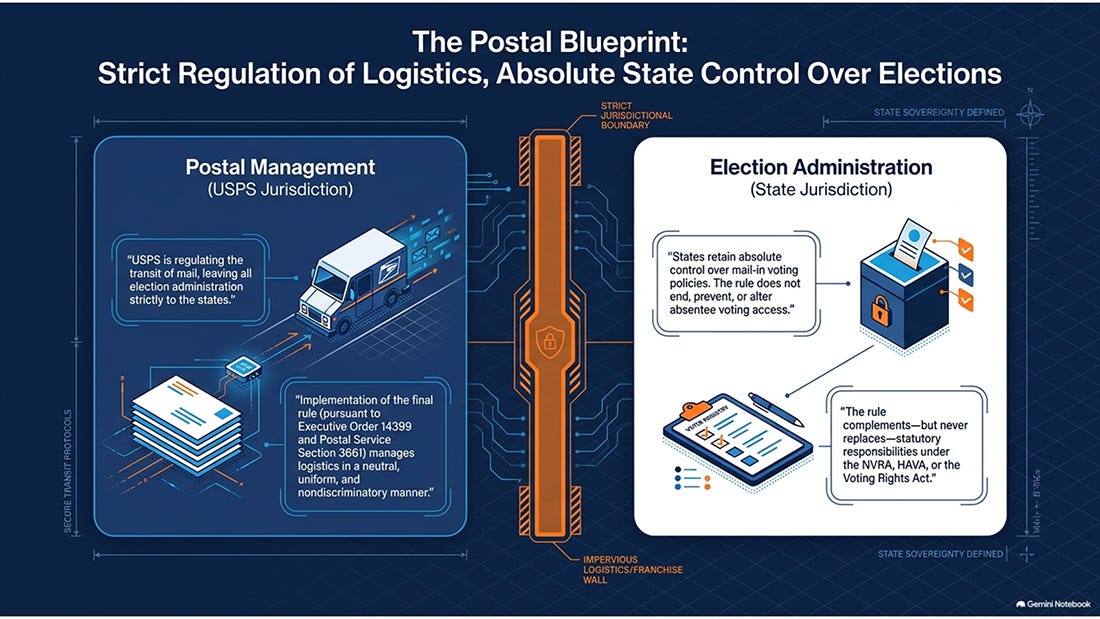
The filings rely on misdirection about the contents of the EO, and the new rules for that matter. The plaintiffs are claiming the federal government is managing who gets a ballot. That’s not the case.
The question is whether the same judge will again flout federal court rules that require a particular showing of harm to gain standing, or flout Supreme Court holding that lower district courts do not have authority to issue nationwide injunctions.
Per SCOTUS Wire:


‘Unspooling’ the Narrative Spin
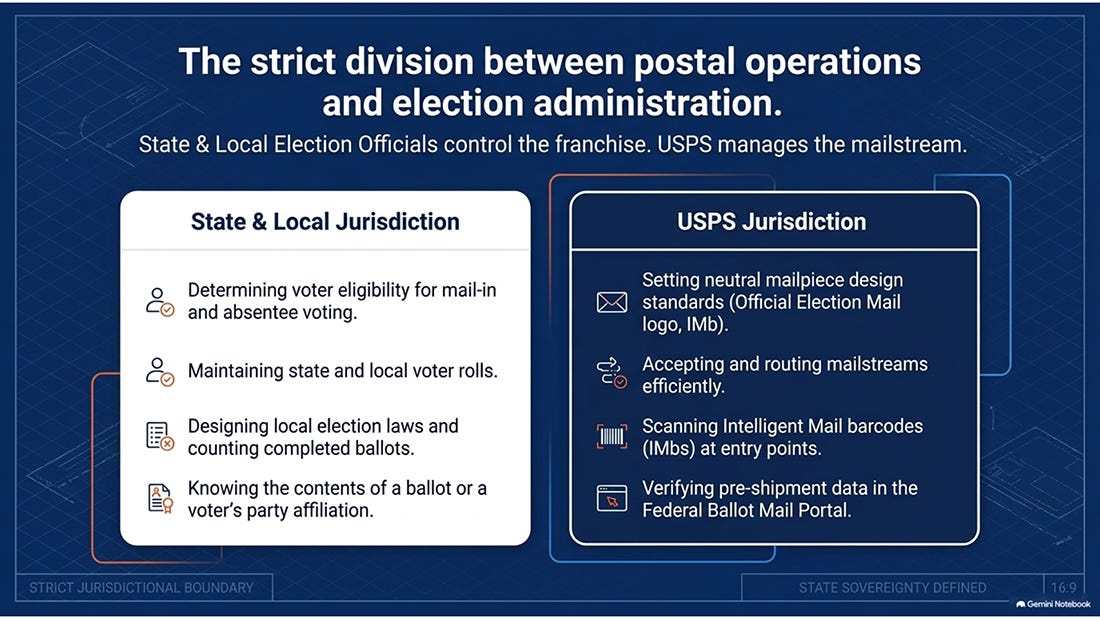
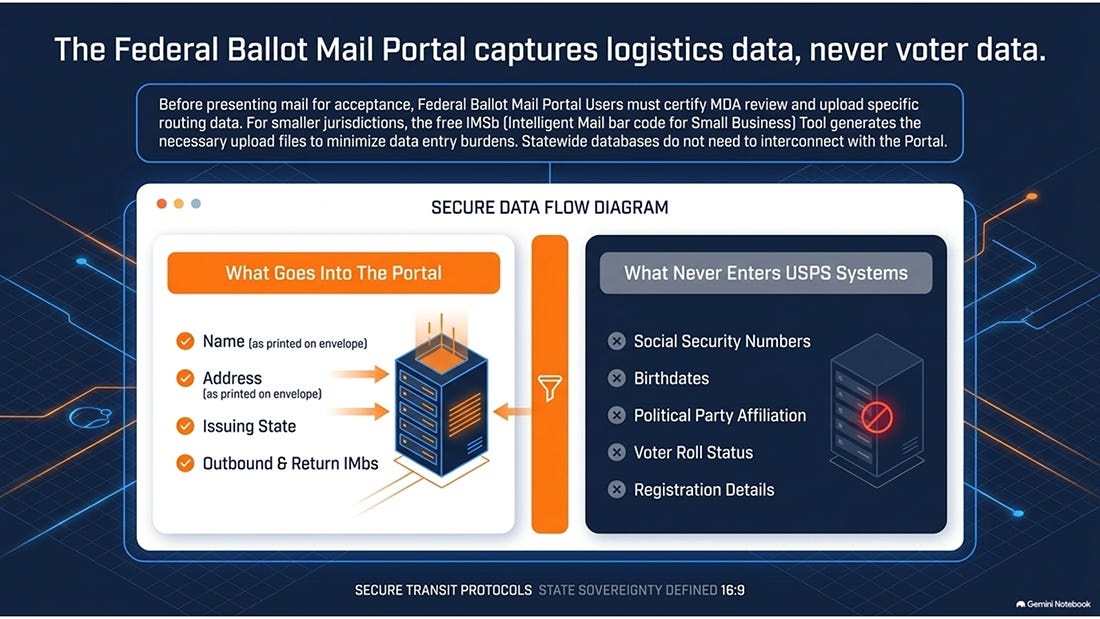
The AP’s coverage reflects a kind of strategic distortion about the new U.S.P.S. rules. It claims they would require states to “give the Postal Service a list of voters eligible to receive them.”
The plaintiffs are also using similar narratives to claim the federal government is somehow managing voter lists and deciding who gets a ballot.
Not quite. But the new system is likely to catch duplicate mailings.
The postal service will need names and addresses of where the ballots are going, so they can be integrated with barcodes and envelopes designed to help processing centers expedite election mail.
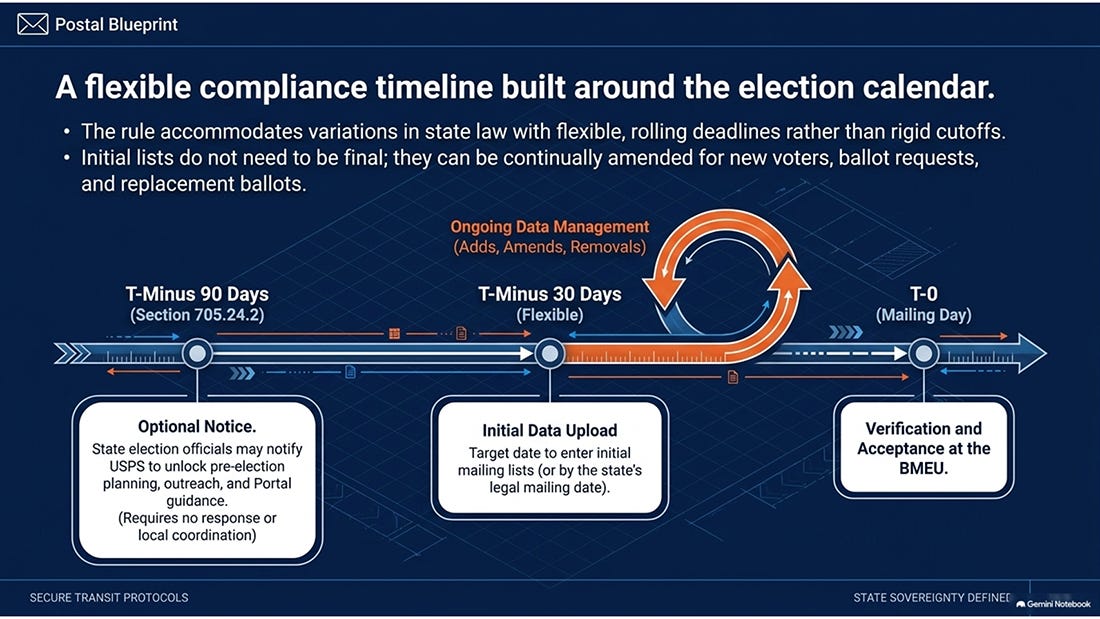
Democrat-aligned media coverage claimed the U.S.P.S. order would be “impossible to implement in the days before the first wave of mail ballots are sent out next week.”
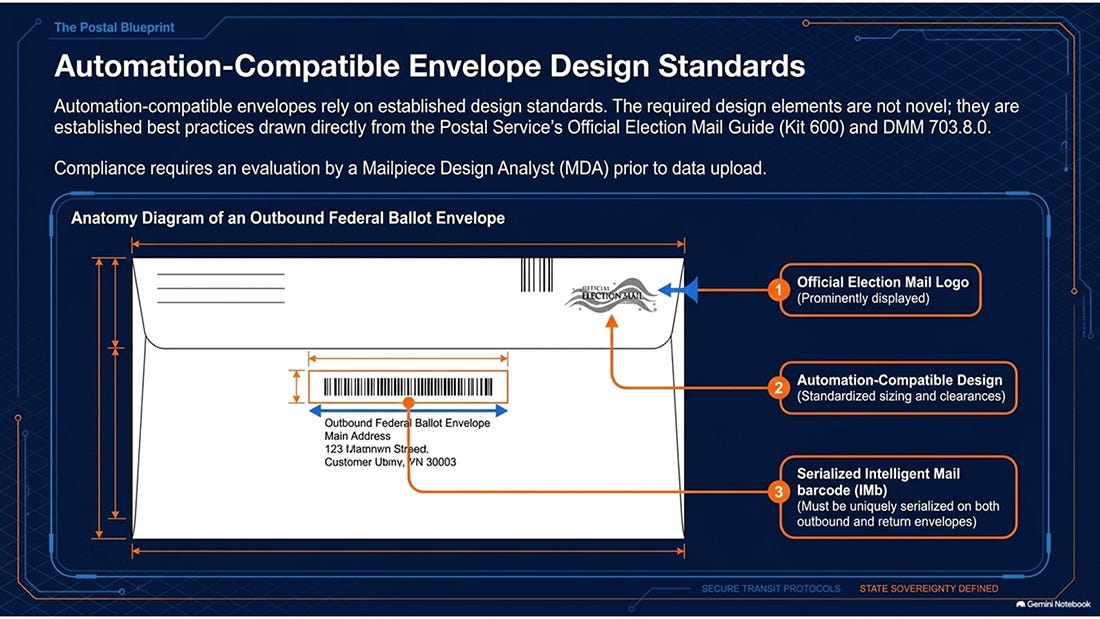
This is not the first time states have worked with the U.S.P.S. to mail ballots. The system has been developed and in use for years. The final rule works with processes finalized in February. The barcodes are a common feature of secure tracking of mail-in ballots to prepare them for outbound and inbound mail with the barcodes.
The “Official Election Mail Guide,” issued in February, explains it all.
EPEC Team summarized the key details in the new rule, and deployed Google’s Gemini tool to output slides that breakdown the workflow.
We’ve included a summary below. (Pinch up to zoom in on a mobile device.)
Amid the convoluted legal cases that are part of a strategy to disrupt the process and delay the security rules, the rules are open for all to read and understand. #